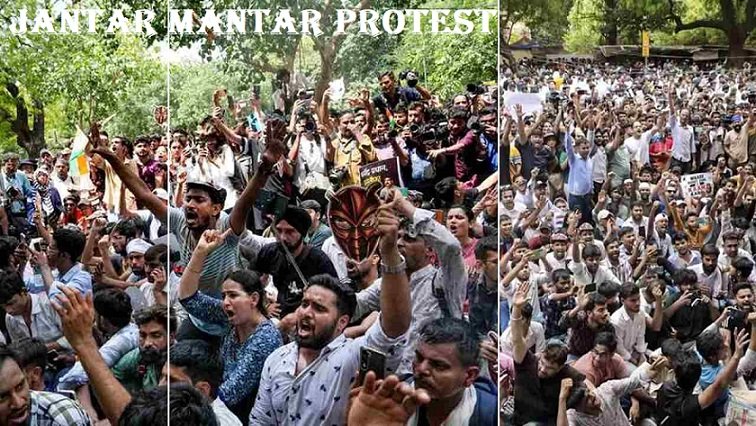
Jantar Mantar Protest: History, Major Protests, Rules and Latest Updates

Introduction to Jantar Mantar Protest
Jantar Mantar protest is a commonly used time period for public demonstrations held at Jantar Mantar in New Delhi, India. For many years, this area has been an essential location for citizens, activists, college students, farmers, human beings and political agencies to elevate their problems and call for motion from the authorities.
Protests at Jantar Mantar have addressed numerous issues, including corruption, unemployment, farmers’ troubles, ladies’ safety, examination irregularities, and political responsibility. These demonstrations have attracted media interest and encouraged public discussion of critical national issues.
However, Jantar Mantar‘s recognition as an authorized protest venue changed in October 2026. Delhi Police announced that the area could no longer be a designated protest site and designated possible venues for demonstrations. This development is essential for all people discovering the history and contemporary reputation of Jantar Mantar protests.
What Is Jantar Mantar?
Jantar Mantar is a historical astronomical observatory located in the heart of New Delhi. It was built in the 18th century under the patronage of Maharaja Sawai Jai Singh II to test celestial movements and enhance astronomical observations.
Today, the monument is known for its ancient and medical significance. The surrounding area additionally have turn out to be broadly recognised as an area in which humans ought to gather to specific their desires and draw the attention of presidency government.
Its place close to essential government establishments helped make it a prominent centre for non-violent demonstrations. Over time, the call Jantar Mantar has grown to be closely related to public protest, political debate and democratic expression.
History of Jantar Mantar Protests
Jantar Mantar emerged as a chief protest vicinity in the early 1990s. Before that, Delhi’s Boat Club region was associated with several huge demonstrations, including a major farmers’ protest in 1988.
As policies on demonstrations near sensitive authorities’ areas expanded, Jantar Mantar emerged as an alternative region for smaller, regulated gatherings. Its proximity to Parliament and authorities’ places of work made it appealing to protest organisers.
Over the following long term, the vicinity hosted demonstrations involving social activists, farmers, students, authorities personnel, and political corporations. Some moves became nationally great due to the reality they highlighted problems that have been already producing public debate.
The place’s information additionally displays the persevering with project of balancing residents’ rights to illustrate with public protection, traffic control and the pursuits of nearby residents.
Major Protests at Jantar Mantar
Several outstanding moves have contributed to Jantar Mantar’s reputation as a centre of public demonstrations.
1. Anna Hazare’s Anti-Corruption Movement
In April 2011, social activist Anna Hazare started a hunger strike associated with demands for more potent anti-corruption measures and a Lokpal law. The movement attracted significant public attention and advocated debate about duty, transparency, and corruption in public life.
The campaign have become certainly one of India’s maximum incredible anti-corruption actions of that duration.
2. Nirbhaya Justice Movement
Following the December 2012 Delhi gang rape case, demonstrations across India demanded justice for the victim and more potent measures to cope with violence against girls.
Jantar Mantar has become one of the places associated with public gatherings calling for accountability, more steady public spaces, and improvements in the management of crimes against girls.
3. Tamil Nadu Farmers’ Protest
In 2017, farmers from Tamil Nadu gathered in New Delhi to draw attention to agricultural misery. Their desires blanketed financial help, debt consolation and movement on water-associated troubles.
The demonstrations attracted attention due to the farmers’ uncommon techniques of protest and their efforts to spotlight the problems faced by farming groups.
4. Wrestlers’ Protest in 2023
In 2023, distinguished Indian wrestlers, which incorporates Sakshi Malik, Vinesh Phogat and Bajrang Punia, protested against Wrestling Federation of India chief Brij Bhushan Sharan Singh.
The wrestlers raised allegations of sexual harassment and demanded action. Singh denied the allegations. The demonstrations generated massive countrywide conversation about athlete protection, duty, and coping with court cases.
5. Citizenship Amendment Act Protests
In December 2019, Jantar Mantar became one of the places related to demonstrations in opposition to the Citizenship Amendment Act (CAA).
Participants expressed worries about the regulations’ implications for citizenship and equality. The protests formed part of a far wider national debate about constitutional ideas, citizenship and government institutions.
6. Cockroach Janta Party Protests in 2026
In 2026, the young adults-led Cockroach Janta Party (CJP) has turned out to be associated with demonstrations over alleged exam irregularities and demands for political accountability.
In October 2026, CJP-related protests additionally centered on the Chief Election Commissioner and the Special Intensive Revision (SIR) of electoral rolls. These were political allegations and demands made thru protesters, not findings that need to automatically be handled as mounted statistics.
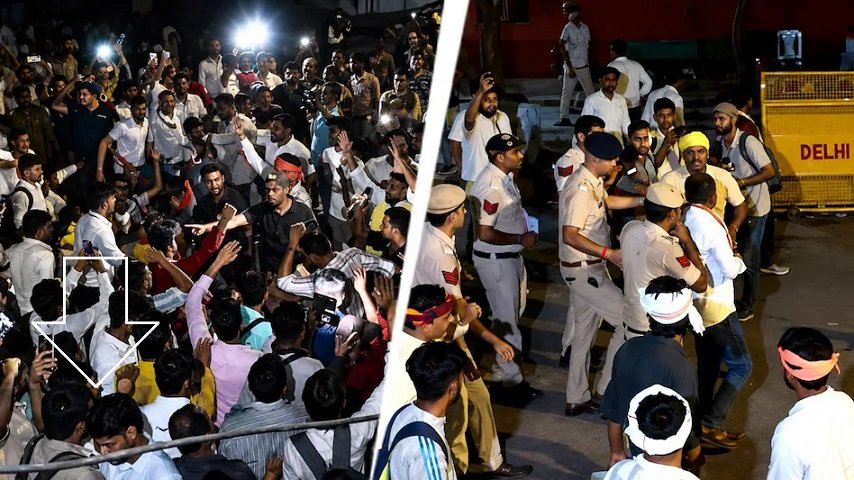
The proposed demonstrations at Jantar Mantar encountered regulations from Delhi Police. Reports also documented detentions and crowd movement regarding activists who attempted to protest after the venue’s reputation was modified.
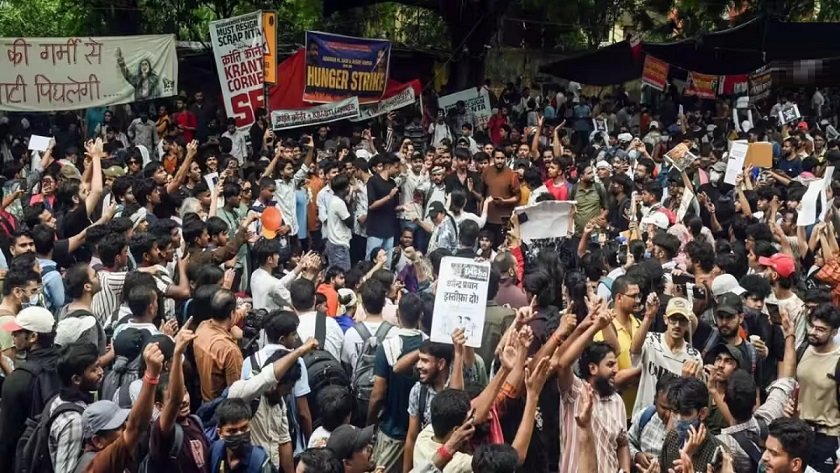
Important Information About Jantar Mantar Protest
| Topic | Important Information |
|---|---|
| Location | New Delhi, India |
| Original purpose of the monument | Astronomical observation and scientific study |
| Protest-site history | Became a prominent protest location from the 1990s |
| Common participants | Activists, students, farmers, workers and political groups |
| Common issues | Corruption, public policy, employment, agriculture and accountability |
| Major 2011 movement | Anna Hazare’s anti-corruption campaign |
| Major 2023 movement | Wrestlers’ protest |
| Important 2026 development | Jantar Mantar was removed from the designated protest-site list in October 2026 |
| Alternative venues announced | Ramlila Ground, Burari Ground and CBD Ground in East Delhi |
| General principle | Peaceful assembly is constitutionally protected, subject to lawful restrictions |
Jantar Mantar Protest Rules and Permission
Public demonstrations in Delhi are subject to relevant legal guidelines, police orders and protection requirements. Organisers can not assume that a public area is automatically available for each rally, sit-in, or march.
Before October 2026, Delhi Police guidelines regulated demonstrations at Jantar Mantar, which encompass requirements concerning advance permission, timing, crowd management, and public safety.
Applications are expected to be submitted in advance. Police must take into account elements which include visitor disruption, crowd length, security problems and the provision of the proposed venue.
Following the October 2026 exchange, Jantar Mantar was eliminated from the list of unique protest venues. Delhi Police recognized Ramlila Ground, Burari Ground and CBD Ground as possible locations for setting up demonstrations.
Anyone making plans for a protest should affirm the state-of-the-art first-rate orders and the permission method with Delhi Police before arranging an assembly. Requirements may additionally vary consistent with the venue, type of demonstration, and prevailing regulations.
Constitutional Right to Protest in India
The Indian Constitution protects crucial freedoms that permit citizens to take part in democratic life.
Article 19(1)(a) ensures freedom of speech and expression, while Article 19(1)(b) gives the right to assemble peaceably and without arms.
These rights are not unlimited. Article 19 allows for reasonable restrictions under particular constitutional grounds. Authorities may impose lawful conditions to deal with public order, security, web site site visitors and different valid troubles.
In July 2018, the Supreme Court addressed rules on demonstrations at Jantar Mantar and the Boat Club region in the case of Mazdoor Kisan Shakti Sangathan v. Union of India. The judgment rejected a blanket prohibition on protests and called for a regulatory framework that balances the right to demonstrate with the rights of residents and the wider public.
The critical difference is that the constitutional right to peaceful assembly continues to exist, although a specific region is not specified for protests.
Why Do People Protest at Jantar Mantar?
Historically, Jantar Mantar furnished several practical benefits to protest organisers.
- Visibility: Its relevant Delhi area helped demonstrations attract media coverage and public attention.
- Political significance: Its proximity to essential authorities institutions made it a symbolic place for human beings in search of insurance modifications or reputable responses.
- Collective expression: People with similar worries ought to acquire, percentage evaluations and communicate commonplace desires.
- Public obligation: Demonstrations provided a way to draw attention to issues that individuals believed had no longer received enough attention.
However, the suitability of any protest vicinity also is based upon on public safety, accessibility, crowd control and the prison permissions applicable on the time.
Impact of Jantar Mantar Protests on Indian Society
Protests held at Jantar Mantar have contributed to public debate on an extensive range of social and political problems. Some have brought allegations into the countrywide spotlight, even as others have helped mobilise people around the need for policy adjustments.
The anti-corruption movement of 2011, for instance, increased public attention to the proposed Lokpal framework. The wrestlers’ demonstrations in 2023 introduced renewed recognition to questions on safeguarding athletes and investigating allegations of misconduct.
Nevertheless, a protest does not automatically bring about a central authority choice or prison reform. Its effect is based upon several factors, which incorporate public participation, evidence, institutional responses, negotiations, and subsequent criminal or political trends.
It is consequently essential to differentiate among what protesters call for, what authorities state, and what is in the end hooked up through professional choices or courtroom docket cases.
Jantar Mantar Protest: Latest Update for 2026
As of October 19, 2026, Jantar Mantar is not listed by Delhi Police as a designated venue for public protests and demonstrations. The exchange was announced in October, with Ramlila Ground, Burari Ground and CBD Ground designated as opportunity venues.
The desire has generated debate about get admission to to public spaces and the realistic exercising of the proper to peaceful assembly. Supporters of restrictions might also point to public order and safety troubles, at the same time as critics have raised concerns about the accessibility and visibility of alternative venues.
For accurate information about a selected demonstration, readers ought to check contemporary Delhi Police notices, applicable court orders, and reliable information critiques. The criminal function and realistic preparations can change, so older reviews describing Jantar Mantar as a licensed protest site can no longer reflect the current state of affairs.
Frequently Asked Questions (FAQs)
1. What is the Jantar Mantar protest?
The term refers to demonstrations historically held at or around Jantar Mantar in New Delhi. Protests have addressed social, financial, political, al and public-coverage troubles.
2. Why is Jantar Mantar famous for protests?
Its important region and proximity to critical government institutions helped it end up a prominent area for residents and corporations to elevate desires and entice public hobby.
3. Which most crucial protests occurred at Jantar Mantar?
Prominent examples include Anna Hazare’s anti-corruption movement in 2011, demonstrations related to the Nirbhaya case, Tamil Nadu farmers’ protests, the 2023 wrestlers’ protest, and severa political demonstrations.
4. Is Jantar Mantar nonetheless a widely spread protest web page in 2026?
No. According to October 2026 reporting on the Delhi Police order, Jantar Mantar was removed from the specific protest-website online listing. Organisers ought to check current rules before making plans for an event.
5. Where can protests be organised as an alternative?
Delhi Police introduced Ramlila Ground, Burari Ground and CBD Ground in East Delhi as opportunity venues. Organisers must verify the applicable permission requirements before proceeding.
6. Does the Indian Constitution defend the right to protest?
Yes. Article 19(1)(a) protects freedom of speech and expression, and Article 19(1)(b) protects non-violent assembly without arms. Both are characteristics within the constitutional framework of lawful regulations.
Conclusion
Jantar Mantar protest has been a big feature in India’s records of public demonstrations. From the anti-corruption movement to farmers’ demands and the wrestlers’ marketing campaign, the location has been associated with residents trying to find duty and adjustments in public policy.
Its removal from the specific protest-net web page listing in October 2026 marks a crucial shift in how demonstrations may be organised in New Delhi. However, the broader constitutional ideas governing non-violent assembly and freedom of expression stay relevant.